CNC Material Selection: Cost vs Lead Time for Bulk Steel
Raw material choice directly drives total cost and delivery schedules for high-volume steel parts. This guide explains how alloy grades, stock forms, and tolerances impact price and lead time. You will learn to write a clearer RFQ and compare quotes fairly to protect your production timeline and budget.
- Alloy grade and stock form set the baseline price before machining starts.
- Tolerances and surface finish requirements change material handling and inspection costs.
- A specific RFQ with stock dimensions and heat traceability reduces quote variance.
- Comparing quotes on the same stock form and inspection level reveals true value.
What Drives the Price of Bulk Steel Before Machining
The price of a batch of steel parts is set long before the first cut. It is set by the alloy grade, the stock form, and the quantity you commit to. A machinist cannot remove cost from a material that is hard to machine or expensive to source. They can only work with what is in front of them.
Bulk steel is not one material. It is a family of grades with different behaviors. Carbon steel is standard and economical. Alloy steels add strength and toughness. Stainless steels resist corrosion. Each choice changes the tooling, the cycle times, and the post-machining inspection needs.
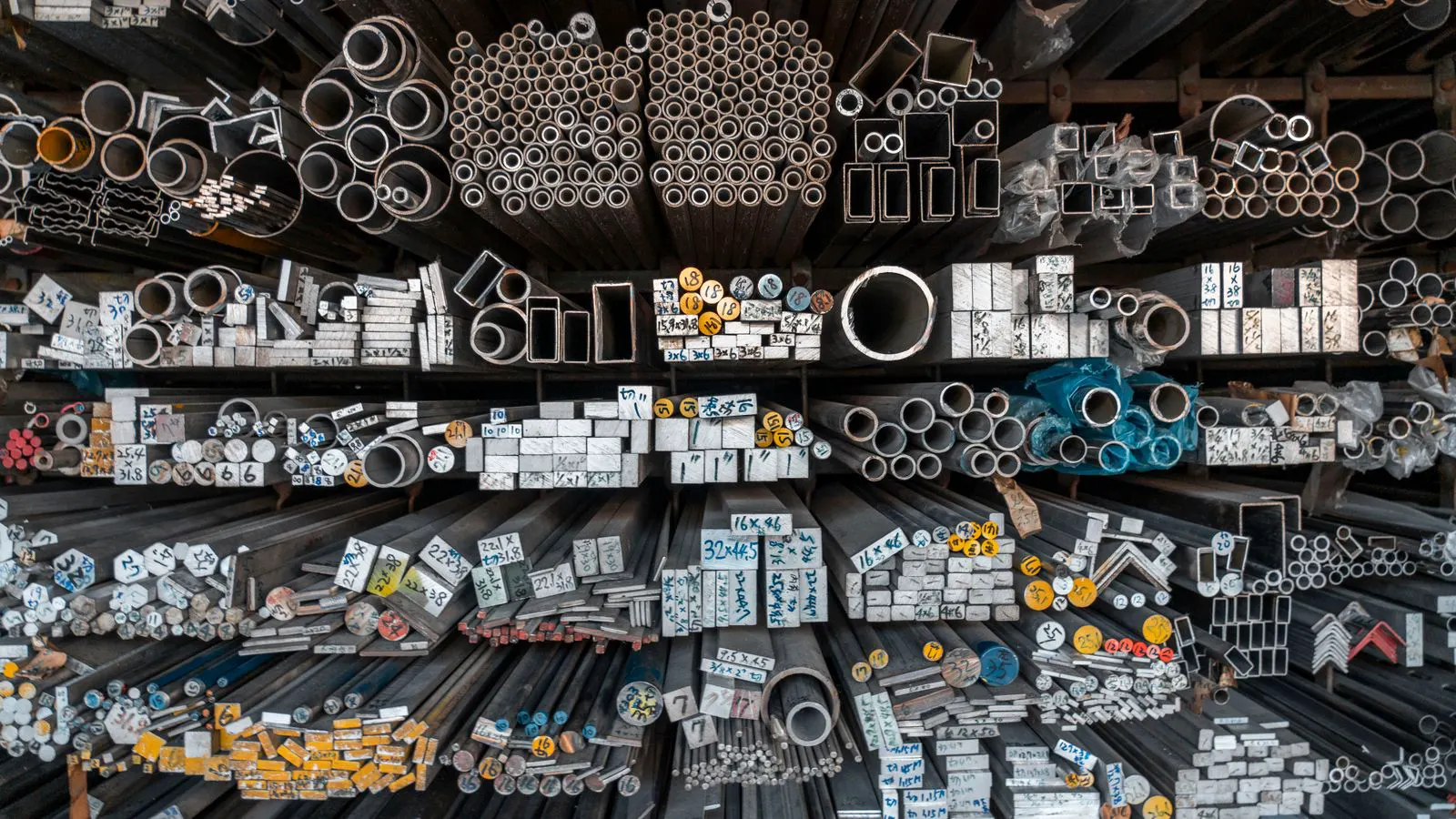
The stock form matters as much as the grade. Plate, bar, tube, and sheet are not interchangeable. A part that looks identical in a CAD file may cost significantly more if you specify plate instead of bar, or if the stock requires special cutting or deburring. The raw material price is only part of the equation. The cost of preparing that material for the machine adds up quickly in high-volume runs.
When you select a material, you are buying a set of constraints. The constraints include hardness, machinability, weldability, and availability. A buyer who understands these constraints can negotiate better. They can also plan their production schedule with more confidence.
How Tolerances and Surface Finish Change Material Costs
Tolerances are not just a quality issue. They are a cost driver. Tighter tolerances require slower cutting speeds, more frequent tool changes, and stricter inspection. For bulk steel, this effect is amplified because the material itself may require more setup time to hold position.
Surface finish requirements add another layer. A matte finish is standard for most structural parts. A polished finish requires additional grinding or lapping. If you specify a tight tolerance and a polished finish on a high-volume steel run, your cycle time increases. Your lead time increases. The price of the finished part goes up.
Many buyers do not realize how much their tolerance stack-up affects material selection. A part that could be made from standard carbon steel may need to be made from alloy steel if the tolerances are too tight for the thermal behavior of the cheaper grade. This is a design decision, not a machining decision. But it often ends up in the machining quote.
You should review your drawings with a material cost lens. Ask if the tolerance is truly needed for the part function. If a 0.1 mm tolerance is specified for a bracket that only needs to fit a bolt, a 0.25 mm tolerance might be better. This small change can allow the use of a cheaper stock form or a faster machining cycle.
How to Write an RFQ That Reduces Quote Variance
A vague RFQ produces vague quotes. If you send a drawing without material details, the machinist will fill in the gaps. They will choose a stock form that is available to them. They will assume standard tolerances if you do not specify. This leads to quotes that do not compare fairly.
To get accurate quotes, specify the material grade and the stock form. State the dimensions of the stock you are providing, or the stock you want them to purchase. If you are buying material separately, state the grade, the form, and the dimensions. If they are to buy it, state the grade and the preferred form.
Include the quantity and the delivery date. Lead time is a function of material availability. If you need parts next month, you need different stock than if you need parts next quarter. Some grades have longer lead times because they are produced in smaller batches or require special certification.
State your inspection requirements clearly. Do not assume the machinist will inspect every part. State if you need 100 percent inspection, first article inspection, or dimensional reports. State if you need heat traceability. For bulk steel, heat traceability can be a significant cost factor. It requires documentation that follows the material from the mill to the finished part.
A clear RFQ reduces the chance of errors. It also allows the machinist to focus on the machining process rather than guessing your intent. This saves time for both sides. It also makes it easier to compare quotes from different suppliers.
How to Compare Quotes Fairly
Comparing CNC quotes is not always straightforward. Two quotes for the same part can look similar but have very different underlying assumptions. One supplier may be using a cheaper stock form. Another may be using a more expensive one. One may be including inspection. The other may not.
To compare quotes fairly, you must normalize the assumptions. Ask each supplier to state the material grade and stock form they are using. Ask them to state the tolerance and surface finish they are quoting. Ask them to state the inspection level. If a quote does not include these details, it is not a complete quote.
You can also compare the cost per part, not just the total. A supplier with a lower total price may have a higher per-part cost if they are charging for setup. In high-volume runs, the setup cost is amortized. In low-volume runs, it dominates. You need to know which part of the cost structure you are dealing with.
Another factor is lead time. A lower price is not worth much if the parts arrive late. You need to factor the cost of delay into your comparison. If a part is late, your assembly line may stop. Your customer may be late. Your reputation may suffer. A small premium for on-time delivery can be worth it.
Cost Drivers in Bulk Steel Machining
The table below lists the main cost drivers for bulk steel machining. These are the factors that move the needle the most. They are not the only factors, but they are the ones you should focus on when comparing quotes and planning your production.
| Cost Driver | Description |
|---|---|
| Material Grade | Carbon, alloy, or stainless steel. Higher grades cost more and may require different tooling. |
| Stock Form | Plate, bar, tube, or sheet. Different forms have different preparation costs. |
| Tolerance | Tighter tolerances require slower cycles and more inspection. |
| Surface Finish | Polished or machined finish. Additional finishing adds cost and time. |
| Inspection Level | 100 percent inspection or sampling. More inspection means more labor and documentation. |
| Lead Time | Shorter lead times may require premium material or expedited processing. |
These drivers interact. A tighter tolerance on a high-grade alloy stock form will cost more than the same tolerance on standard carbon steel. The cost of the material and the cost of the machining are not separate. They are linked.
When you change one variable, you affect the others. If you change the stock form, the setup time changes. If you change the tolerance, the inspection time changes. You need to see the whole picture.
Managing Lead Time for High-Volume Steel Runs
Lead time is the time between the RFQ and the delivery of the parts. It is made up of several segments. Material procurement is one. Machining setup is another. Machining cycle time is another. Inspection and packaging are the last two.
Material procurement is often the longest segment. For bulk steel, you may need to buy the material yourself or have the machinist buy it. If you buy it, you need to ensure it is delivered to the machinist on time. If they buy it, you need to ensure they have access to the right grade and form.
Machining setup is a fixed cost. It is the time to load the tooling and program the machine. It is the same for every part in the run. In high-volume runs, the setup cost is spread over many parts. In low-volume runs, it is a large fraction of the total cost.
Machining cycle time is the time to cut the material. It depends on the tooling, the material, and the tolerance. A tighter tolerance means a slower cycle. A harder material means a slower cycle. You can reduce the cycle time by optimizing the tool path, but there are limits.
Inspection and packaging are often underestimated. If you need 100 percent inspection, every part must be measured. This is a labor-intensive process. It can become a bottleneck in high-volume runs. You need to plan for this time.
Practical Tips for Reducing Cost and Lead Time
You can reduce cost and lead time by making better decisions early. The best time to make these decisions is during the design phase. If you can change the material or the tolerance during design, you save time and money later.
Review your drawings with a machining perspective. Ask if the part can be made from a cheaper material. Ask if the tolerance can be loosened. Ask if the surface finish can be simplified. These changes can have a big impact on cost and lead time.
Work with your machinist early. Bring them into the design process. They can tell you what is practical and what is not. They can suggest changes that will save money. They can also tell you if a part is going to have a long lead time.
Consider the total cost of ownership, not just the part cost. A cheaper part that fails in the field is not cheap. A more expensive part that lasts longer may be better. You need to think about the life of the part and the cost of failure.
Keep your material selection process simple. Do not over-specify. Use standard grades where possible. Use standard stock forms where possible. The more you deviate from standard, the more you pay for customization.
Final Thoughts
CNC material selection is a decision that affects every part of the manufacturing process. It affects the cost, the lead time, and the quality of the finished part. By understanding the cost drivers and by writing a clear RFQ, you can make better decisions. You can also compare quotes fairly and manage your production schedule with more confidence.
The goal is not to find the cheapest material. The goal is to find the right material for the job. The right material is the one that meets the functional requirements, the tolerance requirements, and the budget requirements. It is the one that delivers on time.
By focusing on the details of material selection, you can reduce risk and improve efficiency. You can also build a better relationship with your machinist. You can work together to solve problems and improve the process. This is how you get the best results from your CNC machining operations.
Frequently asked questions
What is the biggest cost driver in bulk steel machining?
The material grade and stock form are usually the biggest cost drivers. These determine the baseline price before machining starts.
How do I reduce lead time for steel parts?
You can reduce lead time by specifying standard stock forms and ensuring material availability. You can also optimize the machining cycle and plan for inspection time.
Is it better to buy material separately or have the machinist buy it?
It depends on your situation. Buying material separately gives you more control and may allow you to negotiate a better price. Having the machinist buy it simplifies the process and may reduce lead time.
How do I compare quotes for steel parts fairly?
You should ask each supplier to state the material grade, stock form, tolerance, surface finish, and inspection level. This allows you to compare the quotes on the same basis.
What should I include in an RFQ for bulk steel parts?
You should include the drawing, material grade, stock form, quantity, delivery date, tolerance, surface finish, and inspection requirements. This gives the machinist all the information they need to provide an accurate quote.