CNC Lead Times: How Material Choice Affects Delivery

Material choice drives your CNC lead time by affecting raw material availability, processing complexity, and supplier stock levels. Choosing stock versus bar material, or common versus exotic alloys, changes your manufacturing schedule and final delivery date.
- Stock materials like aluminum and mild steel usually ship faster than bar stock that requires additional cutting and measuring.
- Exotic alloys and specialty grades often have longer procurement windows than common materials.
- A clear RFQ listing material grade, form, and tolerances prevents back-and-forth delays.
- Confirming material availability at the quote stage protects your manufacturing schedule.
- Surface finish and post-machining requirements add processing steps that extend the timeline.
How Material Form Changes the Production Schedule
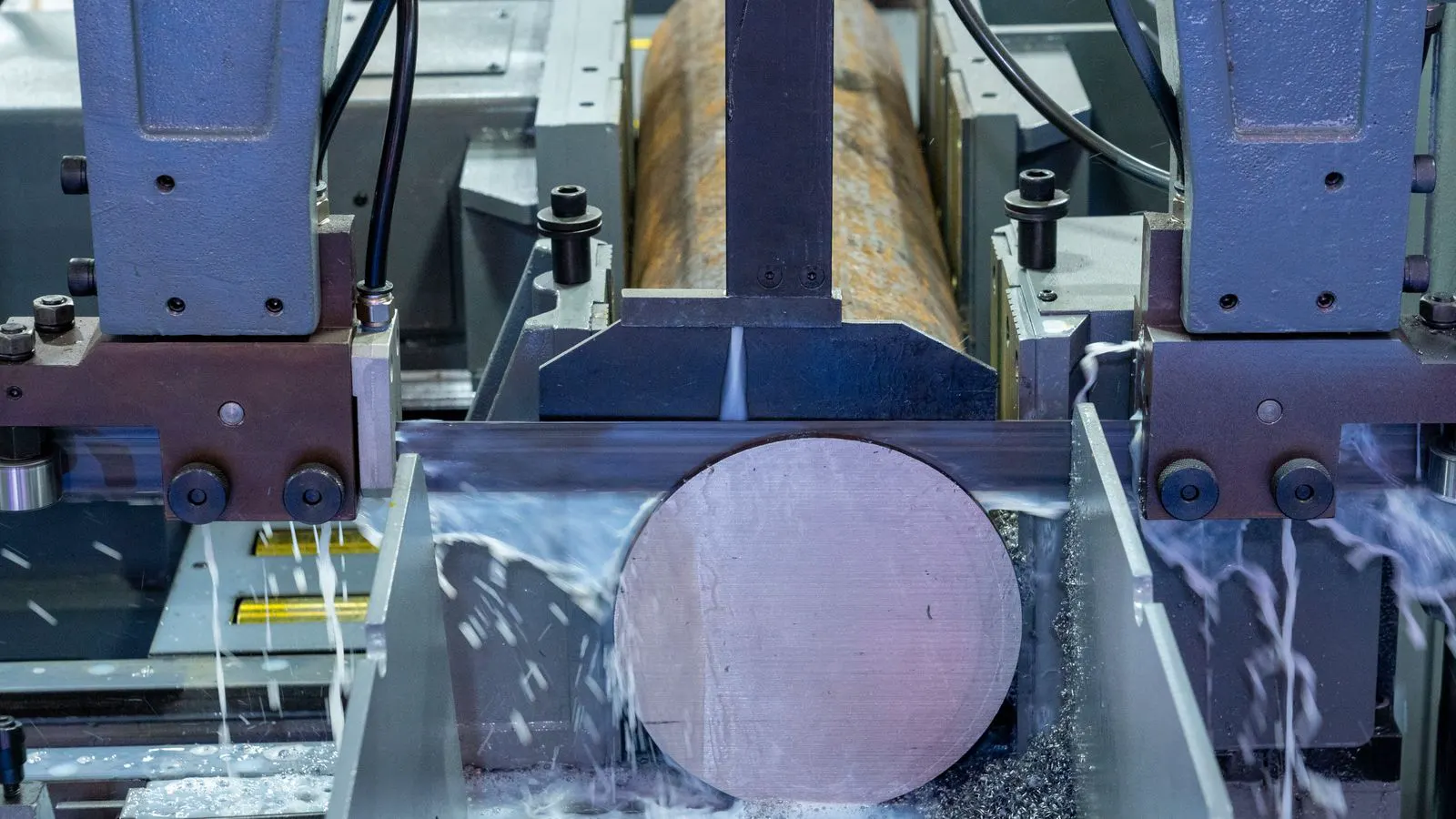
The physical form of your material sets the baseline for your CNC lead time. Stock material, such as plate, sheet, or bar that is pre-cut to standard lengths, moves through the shop floor quickly. A machinist can load the part, fix it to the vise, and start the first operation. Bar stock requires a sawing step before machining can begin. That extra process adds hours. If you request a custom length, the supplier may need to cut the bar to your exact specification before it reaches the machine.
Consider a small batch of 50 brackets machined from 6061-T6 aluminum. If you specify 6mm plate, the material arrives at the shop as a large rectangular sheet. The operator uses a band saw or a guillotine to cut the plate into rough blanks. The blanks then move directly to the 4-axis mill. The entire material preparation phase takes minutes per part. Now compare that scenario to a request for 25mm diameter bar stock. The operator must feed the long bar into a saw. The saw takes time to cut each length. The operator must then deburr the cut ends to prevent chips from entering the tool. If your drawing calls for a specific length that is not a standard cut, the supplier must source a longer bar and saw it down to size. That single sawing step adds labor hours and creates a dependency. If the saw is occupied with another job, your parts wait.
Plate and sheet material often have the shortest lead times because they are standardized. A 6mm or 3/16" plate of 6061-T6 aluminum or 304 stainless is commonly held in inventory. Bar stock in 25mm or 30mm diameter sizes is also widely available. The problem arises when you need a specific diameter that is not a standard size. The supplier must cut the bar from a larger diameter. That cutting step slows the manufacturing schedule. For example, if you need a 22mm diameter bar, the shop may have 25mm stock in the warehouse. They cannot machine a 22mm part directly from 25mm bar without first turning the outer diameter down. That turning operation consumes material and adds cycle time. The resulting part will have a larger core of wasted material, and the shop may charge for that material waste.
Why Specialty Materials Extend the Timeline
Common materials have deep supply chains. 6061 aluminum, 303 stainless, and 1018 mild steel are produced in large volumes and stored by multiple distributors. When you order these, the material often arrives at the machine shop within days. The supply chain is thick. If one distributor is short, another nearby shop can cover the gap. The material moves quickly because the demand is high and the logistics are efficient.
Exotic materials behave differently. Inconel, titanium, and high-grade tool steels have smaller supply chains. The raw material is expensive, so distributors hold less of it. If a shop does not keep Inconel 718 in stock, they must order it from a specialty supplier. That order can take weeks. The machining shop will then hold your project in their queue while waiting for the raw material. During this waiting period, the shop’s other jobs proceed, but your project does not. The calendar days pass without any progress on your part.
The material grade also matters. 304 stainless is a general purpose grade. 316L is more corrosion resistant. Both are common. But if you specify a grade that is less common, the procurement team faces a longer search. The more specific the grade, the higher the risk of a delay. For instance, specifying “titanium” is broad. Specifying “Grade 5 titanium” is specific. Specifying “Grade 5 titanium, annealed” is even more specific. Each level of specificity narrows the pool of available stock. If the shop only has Grade 4 titanium, they cannot use it for your drawing if you require Grade 5 properties. They must source the correct grade. This process adds administrative time and potential shipping delays.
How Tolerances and Finish Add Hidden Time
Material choice and tolerance selection work together. A tight tolerance on a critical dimension requires slower feed rates. The cutter moves less material per pass. The cycle time increases. A 0.05mm tolerance on a hole might take twice as long as a 0.15mm tolerance on the same hole. The machine must make multiple small cuts to achieve the final size. The tool wears faster during these slow, precise passes. The operator must monitor the tool more closely to prevent breakage.
Surface finish requirements add another layer. If you need a smooth finish on a complex geometry, the shop may need multiple roughing and finishing passes. A matte finish requires no extra work. The standard milling operation leaves a matte or semi-matte surface. If you require a polished finish, such as a 0.2 micron Ra, the shop cannot achieve this with the mill alone. They must send the part to a secondary process. Bead blasting, buffing, or polishing are common methods. Each of these processes requires setup time, material handling, and inspection.
Consider a small housing part machined from aluminum. If you request a standard finish, the part leaves the machine with the tool marks visible. If you request a polished finish, the part must go to a finishing bench. The operator cleans the part, applies compound, and runs a wheel against the surface. This step might take 30 minutes per part. Multiply that by 100 parts, and you add 50 hours of finishing time. This time is often hidden in the quote. The quote may list “machining” and “finishing” separately, or it may lump them together. You must ask for a breakdown to understand where the time is going.
How to Write a Clear RFQ
A vague RFQ creates a guessing game. The supplier must ask questions about material form, grade, and finish. Each question adds a day or two to the lead time. The supplier also has to make assumptions to provide a quote. If they assume stock material and you actually need exotic bar, the quote will be wrong. If they assume loose tolerances and you need tight tolerances, the machining time will be underestimated.
A clear RFQ includes the following details:
- Material grade and form, such as 6061-T6 aluminum plate, 10mm thickness.
- Required tolerances, listed as a general class or specific dimensions.
- Surface finish requirement, such as 1.6 micron Ra.
- Quantity and whether the parts are for prototyping or production.
- Any special requirements, such as heat treatment or anodizing.
When you list the material grade and form, the shop can check their inventory immediately. If the material is in stock, the quote can be fast. The procurement team can confirm availability within an hour. If the material is not in stock, the quote will show the procurement delay. You can then decide if the delay is acceptable or if you should change the material.
For example, if you write “Aluminum, 10mm,” the shop has to guess the grade. Is it 6061? 7075? 5052? Each grade has different machining properties and different stock availability. If you write “6061-T6 Aluminum Plate, 10mm,” the shop knows exactly what to look for. The T6 temper matters because it affects hardness and machinability. T6 aluminum is harder and cuts slower than O temper aluminum. If the shop does not know the temper, they may quote based on the wrong assumption.
How to Compare Quotes Fairly
Two quotes for the same part can look different if the material assumptions are different. One shop may assume stock material. Another may assume bar stock that needs cutting. The difference is small but real. One shop may quote 2 weeks. Another may quote 4 weeks. The 4-week quote might include a 2-week wait for specialty material. If you do not ask about the material source, you might choose the cheaper quote and miss your deadline.
When comparing quotes, look at the lead time breakdown. A quote that says “3 to 5 weeks” is less useful than one that says “material delivery in week 2, machining in week 3, final inspection in week 4.” The breakdown shows where the time is spent. It also shows what you can control. If the delay is in material procurement, you cannot speed up the machining. If the delay is in the machining queue, you can ask about rush processing.
A table helps organize these factors. The table below lists common cost and delivery drivers.
| Driver | Effect on Lead Time | Effect on Cost |
|---|---|---|
| Material form (stock vs bar) | Stock is faster | Bar may cost more due to cutting |
| Material grade (common vs exotic) | Exotic grades take longer | Exotic grades cost more |
| Tolerance class | Tight tolerances take longer | Tighter tolerances cost more |
| Surface finish | Extra finishing steps | Extra finishing costs |
| Quantity | Small batches are slower per unit | Larger batches reduce per unit cost |
Use this table as a checklist when reviewing quotes. If one quote is significantly lower, ask why. They may have assumed a looser tolerance. They may have assumed stock material that you actually need to source. They may have omitted a finishing step. Clarifying these assumptions prevents surprises later.
How to Protect Your Manufacturing Schedule
The best way to manage your CNC lead time is to confirm the material at the quote stage. If the shop says the material is in stock, ask them to confirm it in writing. If the material is not in stock, ask for a confirmed delivery date. Do not accept a vague “probably” or “likely.” A confirmed date is a commitment. A vague estimate is a guess.
If your project has a hard deadline, consider the trade-offs. You can often shorten the lead time by loosening tolerances or accepting a matte finish. You can also choose a more common material grade. These changes reduce the processing time and lower the risk of a delay. For example, if you need a part in 2 weeks and the shop says it will take 4 weeks due to tight tolerances, ask if a 0.2mm tolerance would reduce the time. If the answer is yes, and the 0.2mm tolerance still meets your functional requirements, make the change.
The goal is not always the fastest delivery. The goal is a realistic delivery date that fits your project plan. A clear understanding of how material choice affects the manufacturing schedule helps you make that decision. If you need the part for a prototype, you might accept a longer lead time for a specialty material. If you need the part for mass production, you might switch to a common grade to ensure a steady supply.
Final Thoughts on Material and Time
Material selection is one of the biggest factors in your CNC lead time. The grade, form, and condition of the material determine how quickly it reaches the machine. The tolerances and finish requirements determine how long the machine stays on the part.
By specifying the material clearly in your RFQ, you remove guesswork. You give the supplier the information they need to give you an accurate lead time. You also give yourself the ability to adjust the material if the lead time is not acceptable.
A well-managed project starts with a clear material specification. When you know what the material is and how it will be used, you can plan the rest of the schedule with confidence.
Frequently asked questions
Why does bar stock take longer than plate?
Bar stock often requires a sawing step to cut it to the required length. Plate and sheet are usually pre-cut to standard sizes, so they can be loaded directly into the machine.
How does material availability affect the quote?
If the shop has the material in stock, the quote reflects immediate availability. If the material must be ordered from a supplier, the quote includes the procurement lead time.
Can I change the material after the quote is accepted?
Yes, but it will likely change the lead time and the cost. A new material grade or form requires a new check of inventory and a new manufacturing schedule.
What is the fastest material to machine?
Common aluminum grades like 6061 are generally fast to machine because they are soft and widely available in stock form. Stainless steels and titanium are harder to machine and may take longer.
How do I know if a material is in stock?
Ask the supplier directly. A reputable shop will check their inventory system and give you a confirmed date. Do not rely on general availability, as stock levels change daily.