Future of Additive Manufacturing in CNC Workflows
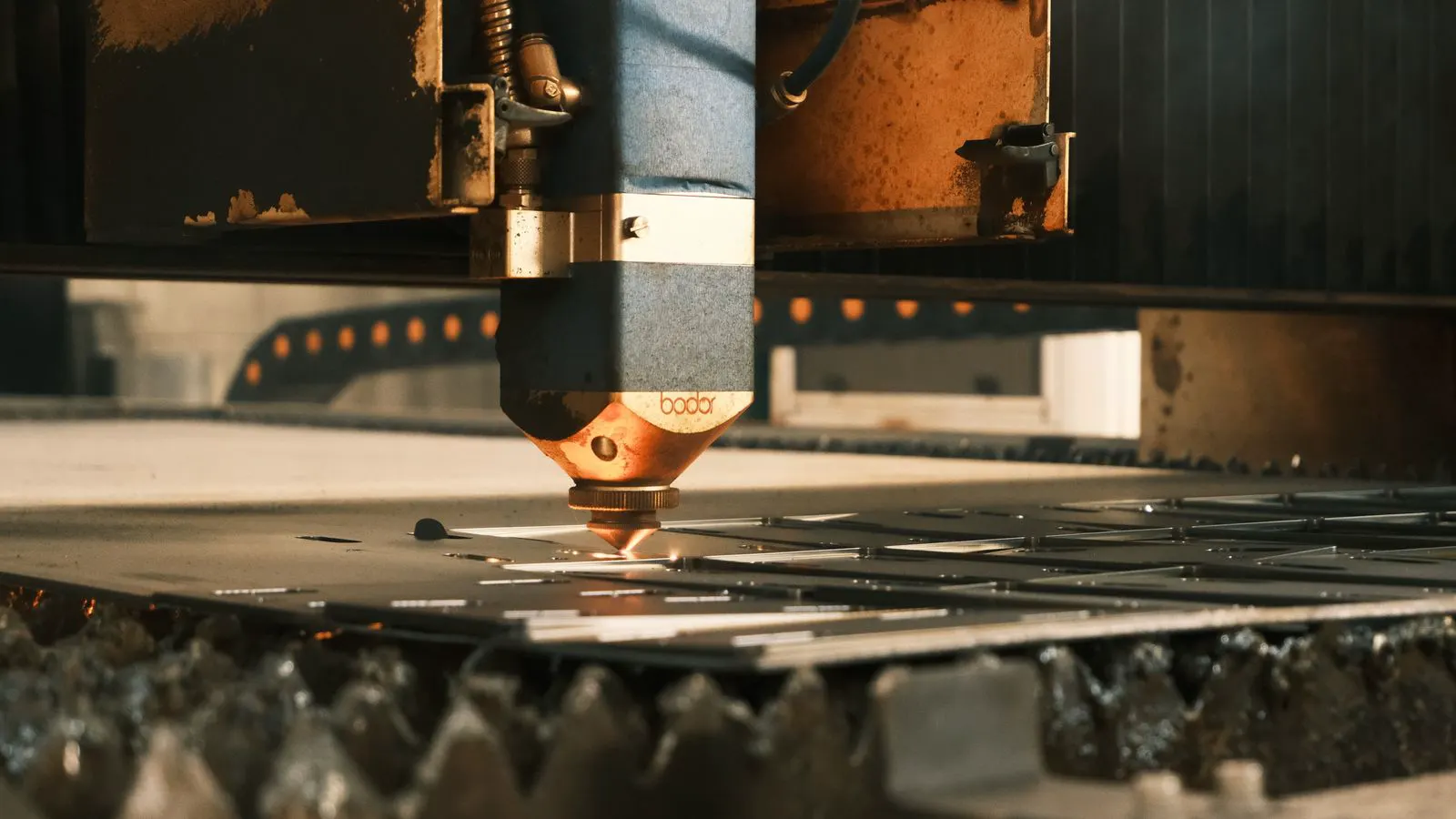
Additive manufacturing is moving from a standalone niche into core CNC workflows. Buyers should plan for hybrid cells, new material handling, digital twin integration, and updated inspection methods. This guide outlines practical shifts to prepare your supply chain for these changes.
- Hybrid cells that combine additive and subtractive steps are reducing lead times for complex parts.
- Buyers must update inspection and quality checks to account for porous structures and surface textures.
- Digital threads connecting design, simulation, and production data are becoming standard in high-value sectors.
- Material sourcing and post-processing requirements are shifting as new alloys and polymers enter production.
- Workforce skills are changing to include additive process knowledge alongside traditional CNC operation.
How Additive Methods Are Entering Traditional CNC Workflows
Additive manufacturing is no longer a standalone technology for low-volume prototypes. It is entering the production floor as a complementary tool to conventional CNC machining. This shift is changing how engineers specify parts, how suppliers plan capacity, and how buyers evaluate capability. The result is a new category of CNC applications that blends additive deposition with subtractive removal.
For many parts, the logic is straightforward. A complex geometry is built by adding material, then machined to remove excess and achieve final tolerances. This approach works well for internal features, lightweight topologies, and parts with difficult-to-access pockets. Buyers who understand this hybrid model can negotiate better pricing and shorter lead times.
The change is not just technical. It alters the relationship between design and manufacturing. Parts that were previously split into multiple machined sub-assemblies can now be produced as single components. This reduces fasteners, assembly steps, and potential failure points. It also changes the cost structure, moving more value into the design and simulation phase.
Which Parts Benefit Most From Hybrid CNC Applications
Not every part benefits from additive methods. The decision depends on geometry, material, volume, and tolerance requirements. The strongest candidates usually share a few characteristics: complex internal channels, conformal cooling paths, lightweight lattice structures, or features that would require multiple setup operations on a conventional mill.
Consider a heat exchanger with internal channels. Traditional CNC machining requires drilling, boring, or EDM to create these passages. Additive processes can build the channels directly, then CNC machining trims the external surfaces and prepares mounting features. The result is a part with higher thermal performance and lower weight.
Another example is a turbine blade. Additive deposition allows for variable wall thickness and internal cooling passages. CNC finishing then ensures the aerodynamic surfaces meet strict tolerances and surface finish requirements. The buyer gains a part that would have been prohibitively expensive or impossible to machine conventionally.
For simpler parts, the math often does not work. A flat plate with a few holes will always be cheaper and faster to mill. The value of additive methods lies in complexity, not in basic geometry. Buyers should evaluate each part on its own merits rather than applying a blanket preference for one method.
How Hybrid Cells Are Changing Floor Layout and Planning
Traditional CNC cells are organized around specific machines: a 5-axis mill, a lathe, a turning center. Hybrid cells combine additive and subtractive machines in a single workflow. This changes how facilities are designed and how material flows.
A typical hybrid cell might include a metal additive machine, a post-processing unit for heat treatment and support removal, and a 3-axis or 5-axis CNC mill. The layout must account for material handling between stages. Parts must move from the additive printer to the finishing center without damage or contamination.
This integration requires careful planning. The additive process is slower than machining for most parts. If a part requires both steps, the additive machine becomes the bottleneck. Buyers must account for this in capacity planning. A supplier with a hybrid cell can often deliver complex parts faster than one that splits the work between two external vendors.
The shift also affects inventory strategy. Because complex parts can be produced as single units, there is less need for intermediate sub-assemblies. This reduces warehouse space and handling errors. However, it increases the value of the raw material and the printed part before final machining. Proper handling and tracking are necessary to protect that value.
What Buyers Need to Check in Quality and Inspection
Additive parts have different characteristics than fully machined parts. Surface textures, grain structure, and porosity vary by process and material. Buyers must adjust their inspection checklists to account for these differences.
Traditional dimensional checks still apply, but they are not sufficient on their own. Buyers should request reports on powder purity, build parameters, and heat treatment cycles. For aerospace and medical applications, traceability is non-negotiable. Each part should be linked to its build log, material certificate, and inspection data.
Surface inspection requires new methods. A machined surface has a predictable texture. An additive surface has a layered structure that may need sanding, polishing, or peening to reduce stress concentrations. Buyers should specify finishing requirements clearly in the drawing. Ambiguity here leads to rework and disputes.
How Digital Threads Are Connecting Design and Production
The digital thread is the data backbone of modern CNC applications. It connects the CAD model to the simulation software, the additive build parameters, and the CNC toolpath. For hybrid workflows, this thread is critical.
A part designed for additive manufacturing must be checked for buildability. Simulation software predicts warpage, stress, and support requirements. The output feeds into the build process. After printing, the CNC toolpath is generated based on the as-built geometry, not just the design intent. This requires accurate measurement of the printed part.
Buyers should ask suppliers about their digital thread capabilities. Can they provide a digital twin of the part? Can they share simulation results? Can they update the toolpath if the part needs a design change? The answer affects how quickly iterations can be made and how errors are caught.
This digital integration also improves traceability. In a regulated industry, each part has a digital record from material receipt to final inspection. This record is an asset for audits and continuous improvement. Buyers who require this level of documentation should state it in the purchase order.
Five Shifts Buyers Should Plan For
The transition to hybrid workflows is not instantaneous. It happens in stages. Buyers who plan for these shifts will be better positioned than those who react late.
-
Capacity Planning Shifts from Machine Hours to Process Time
Traditional planning focuses on machine hours. Hybrid workflows require planning around process time, which includes additive build time, post-processing, and machining. Buyers should model total lead time, not just cutting time. -
Material Strategy Shifts from Standard Stock to Custom Blends
Additive processes use metal powders or specialized polymers. These materials are not always available as standard stock. Buyers should work with suppliers to establish material approvals and stock levels for critical parts. -
Inspection Shifts from Dimensional Checks to Material Verification
As noted, dimensional checks are not enough. Buyers should plan for additional inspection points: powder characterization, in-process monitoring, and post-build metallography for critical parts. -
Workforce Skills Shifts from Single-Trade to Multi-Discipline
CNC operators now need to understand additive processes. Designers need to think about buildability. Buyers should expect suppliers to have cross-trained teams. When evaluating a vendor, ask about their training programs. -
Cost Structure Shifts from Volume-Based to Complexity-Based
Traditional CNC costs scale with volume. Additive costs scale with complexity. Buyers should adjust their cost models to reflect this. A complex part produced in low volume may be cheaper additively than a simple part produced in high volume.
How to Prepare Your Supply Chain for These Changes
Preparation starts with documentation. Update your engineering drawings to specify which features are intended for additive processes and which require machining. Define surface finish, tolerance, and material requirements clearly. Ambiguity leads to rework.
Second, evaluate your current suppliers. Do they have additive capability? Do they have hybrid cells? If not, do they have partners who do? Building these relationships early gives you options when demand increases.
Third, invest in digital tools. If your team does not use simulation software, consider adopting it. The ability to predict build issues before printing saves money and time.
Finally, build a pilot program. Choose one or two parts that benefit from hybrid workflows and run them through the process. Use the results to refine your specifications, inspection protocols, and cost models. Pilot programs reduce risk and provide real data for future scaling.
The future of CNC applications is not about replacing traditional machining. It is about combining methods to solve problems that neither can solve alone. Buyers who understand this shift will find better quality, lower cost, and shorter lead times.
Frequently asked questions
Can additive manufacturing replace CNC machining for all parts?
No. Additive methods are best for complex geometries and internal features. Simple shapes with tight tolerances are still faster and cheaper to machine conventionally.
How do I know if my part is a good candidate for a hybrid workflow?
Look for complex internal channels, lightweight topologies, or features that require multiple setups. If the part has high complexity and low to medium volume, a hybrid approach is worth evaluating.
What are the main quality risks in additive parts?
Porosity, warpage, and surface texture are the main risks. Buyers should require material certifications, build parameter logs, and appropriate inspection methods to verify quality.
Do I need to change my inspection process for additive parts?
Yes. Traditional dimensional checks are not sufficient. Add additional checks for material integrity, surface finish, and traceability. Update your inspection checklist to include these parameters.
How long does it take to integrate additive methods into an existing supply chain?
It varies by company. Small changes, like adding a few hybrid parts to a pilot, can take weeks. Full integration with digital threads and new inspection protocols can take months to years.