CNC Milling vs Turning: Cost and Speed Comparison
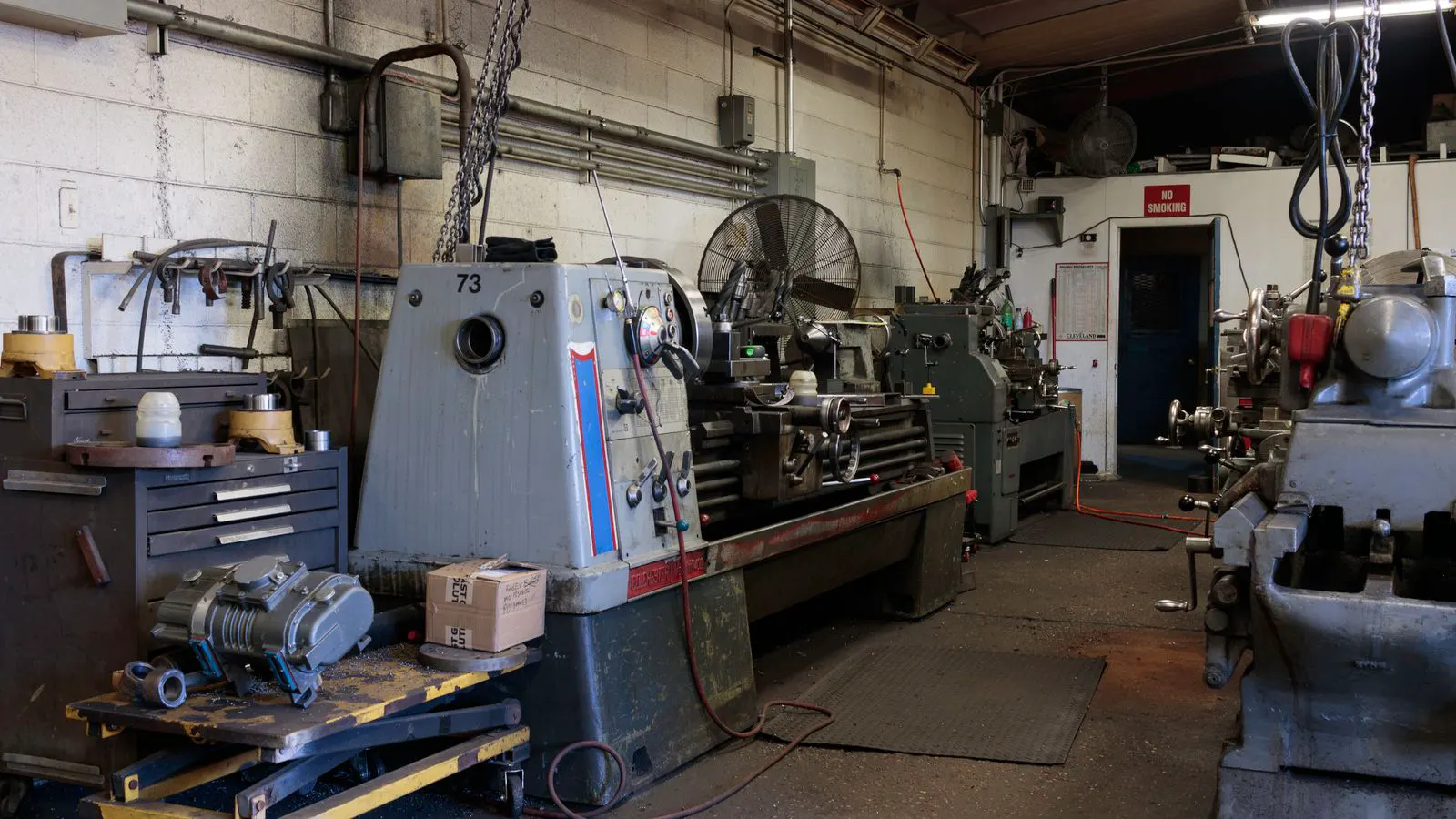
CNC milling and turning serve different part types. Turning excels for rotational parts, while milling handles complex, non-cylindrical geometries. The cost and speed difference depends on material removal, tooling, and fixture requirements rather than a single universal rule.
- Turning is generally faster for rotational parts because it removes material continuously along the axis.
- Milling handles complex shapes but often requires more setup time and specialized tooling.
- Cost differences depend on material removal rates, fixture complexity, and operator skill.
- Engineers should match the process to the part geometry rather than assuming one is always cheaper.
- Rush orders and tight tolerances shift the balance between speed and cost.
Why the comparison matters for part selection
CNC milling and turning are the two most common subtractive processes in production work. Engineers often ask which is cheaper or faster, but the answer depends on the part. A simple bushing may turn out cheaper on a lathe, while a bracket with multiple pockets needs a mill.
The choice affects tooling cost, setup time, and cycle time. It also changes the inspection strategy and post-production operations. Buyers who specify the process without checking the geometry often pay for unnecessary setup or accept slower production.
Consider a flange with a central bore and two side holes. Turning handles the bore and the outer diameter efficiently. The side holes require a mill or a lathe with a drilling head. If you send the flange to a mill, the operator must clamp the part to a plate, locate the center, and cut the outer diameter. This adds setup time and increases the risk of clamping marks on the visible face.
Consider a motor housing with a circular base, four mounting bosses, and a complex internal cavity. A lathe cannot cut the internal cavity or the non-circular bosses without significant rework. A mill handles all features in a single setup if the part fits in the work envelope. The comparison is not about abstract capability but about matching the geometry to the machine architecture.
Cost factors that drive the difference
The base cost of a CNC process comes from machine time, tooling, fixtures, and labor. Turning typically uses fewer axes and simpler tool holders. The part rotates, and the tool cuts in a steady path. This keeps the cycle time short for cylindrical features.
Milling involves moving the tool in multiple directions. Each pocket, slot, or contour adds time. The tooling is often more expensive because it must withstand varying angles and forces. Multi-axis mills can reduce setup time for complex parts, but they require more expensive machines and skilled operators.
Tool wear patterns differ significantly between the two processes. On a lathe, the cutting edge experiences a relatively consistent load. The insert stays sharp longer if the feed rate is stable. On a mill, an end mill enters and exits the material frequently. This causes shock loading on the flutes. A tool that lasts for hours on a lathe may chip after a few minutes in a tough steel pocket on a mill.
Setup costs often surprise buyers. A lathe setup is quick. The operator loads a chuck, inserts the workpiece, and runs a tool offset. A mill setup requires a fixture. For a production run of a bracket, the shop might build a dedicated fixture with locating pins and clamps. If the part design changes slightly, the fixture may need modification or replacement. This adds cost that does not show up in the per-part quote but affects the total project price.
Speed comparison for common part types
| Option | Best for | Limitations |
|---|---|---|
| CNC Turning | Rotational parts, shafts, bushings, flanges | Poor for non-cylindrical features, limited to axial and radial cuts |
| CNC Milling | Brackets, housings, plates, complex profiles | Slower for large rotational volumes, higher tooling cost |
| 5-Axis Machining | Complex aerospace and medical parts | High machine cost, long setup, difficult programming |
| Hybrid Turning/Milling | Parts with both rotational and flat features | Requires specialized machine, higher capital cost |
| Manual Setup vs Auto Setup | Prototypes vs high-volume production | Auto setup costs more upfront but reduces cycle time |
Turning is faster for parts that rotate. The workpiece spins, and the tool moves linearly. This creates a continuous cut with minimal stopping. A simple shaft can run for hours without operator intervention. The machine maintains a constant cutting velocity relative to the material. This consistency improves surface finish and tool life.
Milling is slower for large volumes of simple parts. The tool must reposition for each feature. However, it wins for parts with multiple flat surfaces, holes, and contours. A single setup can produce a complex bracket that would take multiple operations on a lathe. The mill can cut a pocket, drill a hole, and counterbore a shaft in sequence. On a lathe, the operator would need to stop the cycle, move the part, and reposition the tool for each different feature type.
When turning is the better choice
Pick turning when the part has rotational symmetry. Shafts, gears, bushings, and flanges fit this category. The part must have a central axis that can be held in the chuck or between centers.
Turned parts often have tighter tolerances on diameter and length. The process controls these dimensions naturally. If the design has many circular features, turning reduces the number of operations. Fewer operations mean less handling, less chance of damage, and lower cost.
For example, a hydraulic cylinder rod requires precise diameters and a smooth surface finish. Turning allows the operator to cut the rod in a single setup. The tool can perform roughing, finishing, and threading in one go. The surface finish is excellent because the tool contact is continuous. If the same rod were milled, the operator would need to clamp the rod in a chuck or fixture, then mill the outer diameter. The mill would struggle to maintain a constant diameter because the workpiece is not rotating. The operator would need to rotate the workpiece manually or use a rotary table, which adds complexity and cost.
Turned parts also benefit from the machine’s ability to handle long lengths. A lathe can cut a shaft that is longer than the mill’s work envelope. The operator can use a steady rest or a tailstock to support the part. This allows for high-precision machining of long, thin components that would be difficult to hold rigidly in a mill.
When milling is the better choice
Pick milling when the part has flat surfaces, pockets, or non-circular features. Brackets, machine housings, and electrical connectors need milling. The part does not rotate, so the tool moves in X, Y, and Z directions to cut each feature.
Milling handles materials that are hard to hold in a chuck. Thin plates, irregular shapes, and parts with many holes benefit from a flat vise or fixture. The operator can access all faces without rotating the workpiece.
Consider a PCB mounting board. It has a flat surface, many small holes, and possibly some slots. A lathe cannot cut the slots or the small holes efficiently. A mill can drill all the holes and slot the openings in a single setup. The tool changes are quick, and the part remains fixed in the vise. The operator can program a drilling sequence that moves the tool from hole to hole. This is much faster than trying to hold the board in a lathe chuck and using a drill head.
Milling is also preferred for parts with complex internal features. A pump housing has internal channels, bores, and mounting surfaces. A mill can cut the internal channels and the bores in a single setup. A lathe would need to cut the external shape, then hold the part and cut the internal bores. This requires multiple setups and increases the risk of error.
Tooling and fixture costs
Tooling cost often determines the true economics. Turning uses standard carbide inserts and tool holders. These are inexpensive and widely available. The tool changes are quick and predictable.
Milling uses end mills, ball-nose tools, and drill bits. These tools wear differently based on the angle and material. A complex part may need multiple tool types. Each tool adds to the setup time and the tooling inventory.
For instance, a complex bracket might require a 1/2 inch end mill for roughing, a 1/4 inch ball-nose tool for contouring, and a 1/8 inch drill bit for mounting holes. Each tool has a specific cost and a specific lifespan. The operator must manage these tools in the tool changer. If one tool breaks, the operator must find a replacement and re-verify the tool offset. This adds time and potential for error.
Fixtures matter too. Turning uses chucks and centers, which are standard. Milling often requires custom vise jaws, clamps, or fixtures. For prototypes, a simple vise may work. For production, a dedicated fixture reduces setup time and improves repeatability.
A custom fixture for a production part might cost a few thousand dollars to design and build. However, it can reduce the setup time from two hours to thirty minutes. For a production run of ten thousand parts, this time savings can offset the fixture cost quickly. The fixture also ensures that every part is held in the same position, which improves consistency and reduces scrap.
Lead time and production planning
Lead time depends on the machine availability and the number of operations. Turning usually has shorter lead times for simple parts because the cycle time is short. The part moves from setup to finished product quickly.
Milling has longer lead times for complex parts. The programming takes more time, and the cycle runs longer. If the part needs multiple setups, the lead time increases further. Engineers should plan for this when scheduling production.
Rush orders shift the balance. If the part is simple and turning is available, it may be faster. If the part is complex and only milling can produce it, the rush cost increases. Buyers should specify the process in the request to avoid delays.
Consider a prototype that needs to be delivered in one week. If the part is a simple shaft, a local shop with a lathe can turn it quickly. If the part is a complex bracket, the shop might need to outsource the milling to a specialist. The lead time for the bracket could be three weeks. The buyer must plan for this difference.
Production planning also involves machine availability. A shop might have two lathes and one mill. If both processes are available, the shop can balance the workload. If one machine is down for maintenance, the shop might have to shift work to the other process. This can affect the lead time and the cost.
How to choose the process for your part
Start with the geometry. If the part is mostly cylindrical, choose turning. If it has flat surfaces and complex contours, choose milling. If it has both, consider a hybrid machine or multiple operations.
Next, check the material. Hard materials like stainless steel or titanium slow down both processes. Turning handles them well for rotational parts. Milling may need slower feeds and more robust tools.
Finally, look at the quantity. For prototypes, the setup cost matters less. For high volumes, the cycle time drives the cost. A process that is slower per part may still be cheaper if it runs automatically for hours.
Engineers who match the process to the part avoid unnecessary costs. They also improve quality and lead time. The comparison is not about which is better, but which fits the design.
Common mistakes in process selection
One mistake is assuming milling can replace turning. It can, but it is slower and more expensive. A simple shaft turned on a lathe takes less time than the same shaft milled on a 3-axis machine.
Another mistake is ignoring the fixture. A complex part on a mill may need a custom fixture that costs more than the part itself. For low-volume work, a simple vise may be enough. For high volume, the fixture investment pays off.
The third mistake is not planning for finishing. Turned parts often need deburring and surface finishing. Milled parts may need additional passes for surface finish. These operations add time and cost.
Engineers should review the drawing and the process together. The best process is the one that produces the part within the tolerance, lead time, and budget.
Frequently asked questions
Which process is cheaper for high-volume production?
Turning is usually cheaper for high-volume rotational parts because the cycle time is short. Milling is cheaper for complex, non-cylindrical parts where multiple setups would be needed on a lathe.
Can a single machine do both milling and turning?
Yes, hybrid machines combine both capabilities. These machines are useful for parts that have both rotational and flat features, but they cost more and require specialized programming.
How does material affect the cost comparison?
Hard materials slow down both processes. Turning handles hard materials well for cylindrical parts. Milling may need slower feeds and more robust tools, which increases the cycle time and tooling cost.
What is the best process for a complex bracket?
Milling is the standard choice for complex brackets. The part has flat surfaces, pockets, and holes that require multi-axis tool movement. Turning cannot produce these features efficiently.
How do I reduce lead time for a new part?
Match the process to the geometry and simplify the design where possible. Fewer operations and standard tooling reduce setup time. Specify the process in the request to avoid delays in production planning.