5-Axis vs 3-Axis CNC: Which Machine Fits Your Part?
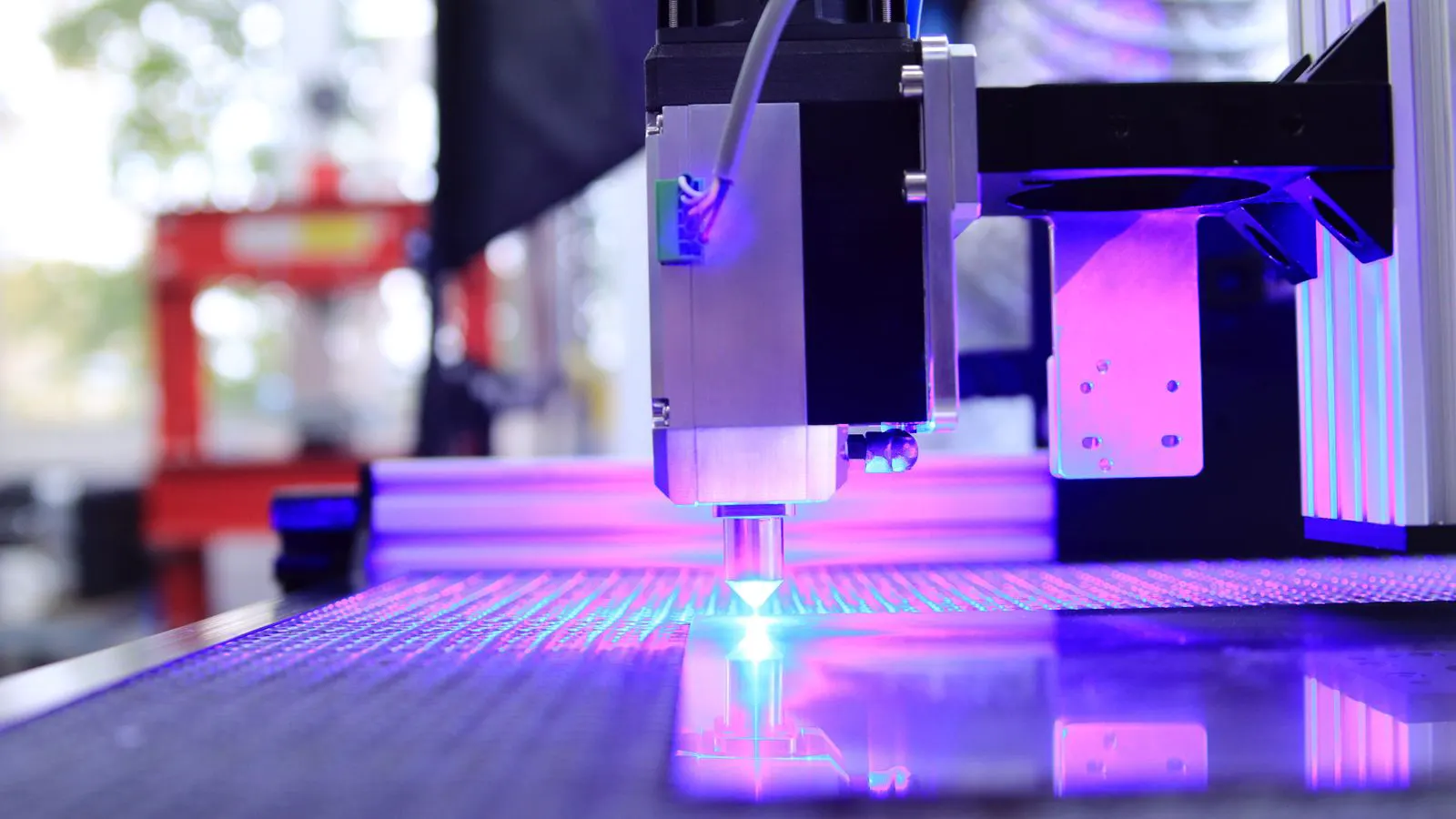
5-axis vs 3-axis CNC selection depends on part geometry and setup complexity. 3-axis suits flat or simple profiles; 5-axis handles complex contours with fewer setups. Match the machine to your design intent to control cost and cycle time.
- 3-axis machines work well for flat plates, through-holes, and simple stepped features.
- 5-axis machines reduce setup time for complex geometries by allowing multi-angle cutting.
- Axis count should follow part complexity, not marketing preference.
- Tolerances and tool access drive the final machine selection.
What Actually Changes Between 3-Axis and 5-Axis
The difference between a 3-axis and a 5-axis CNC machine is not just more numbers on the spec sheet. It is how the tool moves relative to the work. A 3-axis mill moves the cutter along X, Y, and Z. A 5-axis mill adds two rotational axes, allowing the table or head to tilt. This lets the tool attack the part from different angles without repositioning the workpiece.
That mechanical difference changes what you can cut, how many setups you need, and how much time the part spends in the machine.
Which Machine Handles Your Part Geometry
Start with the drawing. If the part is a flat plate with holes, slots, and pockets, a 3-axis mill is usually enough. The tool stays vertical, and the work sits flat on the vise. This keeps fixtures simple and inspection straightforward.
The situation changes when the part has angled surfaces, internal corners, or curved contours that cannot be reached from the top. A 5-axis machine can tilt the part so the end mill or ball nose tool enters at the right angle. This removes the need for multiple flips and re-fixturing.
A good rule of thumb: if the part has more than three planes that meet in a way that blocks a vertical tool, consider 5-axis. If the geometry stays flat or step-like, 3-axis remains practical.
CNC Milling Comparison: Setup Time and Fixture Costs
Setup time is where the numbers get real. On a 3-axis machine, a part with a top face and an angled side often needs two setups. The first setup cuts the top. The part then moves to a second vise position to cut the angle. Each move adds handling, clamping, and alignment checks.
On a 5-axis machine, that same part can stay in one fixture. The table tilts, the tool cuts from the needed angle, and the part remains in the same datum position. This reduces the chance of cumulative error from re-clamping.
Fixture costs follow the same logic. A 3-axis process may need multiple custom clamps or a dedicated fixture plate for each orientation. A 5-axis process often uses one robust fixture that holds the part through multiple tool paths. The initial fixture cost may be higher, but it drops when you are running the part repeatedly.
| Option | Best for | Limitations |
|---|---|---|
| 3-Axis CNC | Flat plates, through-holes, simple pockets, high-volume simple parts | Cannot cut angled surfaces without re-fixturing; slower on complex contours |
| 4-Axis CNC | Turning and milling with rotary work, barrel-shaped parts, decorative milling | Limited multi-face capability; still requires repositioning for full 5-face work |
| 5-Axis CNC | Complex contours, internal corners, multi-angle features, aerospace and medical parts | Higher machine cost; higher programming complexity; steeper learning curve |
| 5-Axis Trunnion | Large parts that need full 360-degree rotation and tilt | Larger floor space; heavier machine; longer tool reach can limit rigidity |
| 5-Axis Head | Compact machines with high precision and small part work | Limited part size; head rotation may restrict tool length and workpiece overhang |
Tool Access and Feature Reach
Tool access is the hidden driver in axis selection. A 3-axis mill uses vertical tool paths. If a pocket is deep and the walls are steep, the tool can rub against the wall as it moves. This limits the radius of the tool and the depth you can reach cleanly.
A 5-axis machine tilts the work so the tool enters the pocket at a shallow angle. The tool clears the walls. This lets you use smaller, sharper tools and reach internal features that would otherwise need a separate drilling or reaming operation.
Think of a turbine blade, a medical implant, or a bracket with angled mounting surfaces. On a 3-axis mill, you might cut the flat faces, then drill the angled holes, then finish with a separate chamfer. On a 5-axis mill, the tool cuts the flat, the angle, and the chamfer in the same cycle. The part does not leave the machine.
Tolerances and Surface Finish
Axis count affects tolerance control, but not in a simple “5-axis is always tighter” way. Both machines can hold tight tolerances. The difference is how consistent the datum is.
When you flip a part for a second 3-axis setup, the new clamping points introduce error. Even a small shift changes the position of the next feature relative to the first. A 5-axis machine keeps the part on the same fixture, so the datum remains stable throughout the cut. This matters when multiple features must line up.
Surface finish also changes. A 5-axis tool path can keep the cutter at the optimal angle for the contour. This reduces tool wear and improves finish quality. On a 3-axis machine, the tool may fight the geometry, causing chatter or a rougher surface that needs a second pass.
Cost: Machine, Programming, and Cycle Time
The machine price is the obvious number, but it is not the whole story. A 3-axis machine is cheaper to buy and easier to program. A 5-axis machine costs more, and the CAM software must handle rotational axes. The programming time goes up. The operator must understand how the head or table moves.
Cycle time can go either way. For simple parts, a 3-axis machine often wins because the tool path is straightforward. For complex parts, a 5-axis machine wins because it eliminates setup moves and re-fixturing. The cycle time savings on the part may be small, but the total production time drops because the part spends less time waiting in a vise.
If you are running a low volume of one-off complex parts, the 5-axis machine may not pay off unless the part is critical or the geometry is too hard for a 3-axis setup. If you are running a high volume of a complex part, the 5-axis machine can reduce total lead time and labor.
When to Pick Each Machine
Pick a 3-axis machine when the part is flat, the features are through-holes or shallow pockets, and the volume is high. The machine is simpler, the program is easier to write, and the fixturing is straightforward. This is the right tool for sheet metal brackets, plate parts, simple housings, and high-turnover components.
Pick a 5-axis machine when the part has multiple angled faces, internal contours, or features that require tool access from a side or top angle. This fits aerospace brackets, medical implants, turbine components, and complex molds. The machine handles the geometry in one setup, which reduces error and cycle time.
Pick a 4-axis machine when the part has a rotational feature, such as a barrel, a shaft with a contour, or a decorative pattern that wraps around a cylinder. It is a middle option between 3-axis and 5-axis. It does not handle full multi-face work, but it handles rotary milling better than a 3-axis mill.
Practical Checklist Before You Order
Before you select the machine, check these points:
- Count the planes that meet at an angle. If there are more than three, 5-axis is worth considering.
- Check tool access. Can a vertical tool reach every feature? If not, the part needs rotation.
- Look at the datums. Where will the part sit in the fixture? If the same datum must stay true through multiple features, 5-axis reduces error.
- Estimate setup time. How many flips or re-fixturing moves does a 3-axis process require?
- Match the tolerance. If the part must hold tight tolerances between multiple features, a 5-axis machine keeps the datum stable.
- Review the volume. Low volume favors the cheaper 3-axis machine. High volume favors the machine that cuts cycle time.
- Check the CAM capability. Can your software handle 5-axis tool paths? If not, you need a new toolchain.
Final Decision
The 5-axis vs 3-axis CNC decision is not about which machine is better. It is about which machine matches the part. A 3-axis machine is the workhorse for flat and simple geometry. A 5-axis machine is the specialist for complex contours and multi-angle features.
Look at the drawing. Count the angles. Check the tool access. Estimate the setups. Let the geometry drive the choice, not the machine label.
Frequently asked questions
Can a 3-axis machine cut angled features?
Yes, but it usually needs a second setup. You cut the flat face, move the part, then cut the angle. This adds handling time and potential error.
Is 5-axis always faster than 3-axis?
No. For simple parts, 3-axis often has shorter cycle times because the tool path is direct. For complex parts, 5-axis is faster because it removes setup moves.
Do I need 5-axis for tight tolerances?
Not always. A 3-axis machine can hold tight tolerances. But if multiple features must align, 5-axis keeps the part on one fixture and reduces cumulative error.
What is a 4-axis machine good for?
It adds rotary motion, so it handles barrels, shafts, and decorative patterns. It is a middle option between 3-axis and 5-axis.
Can I run a 5-axis program on a 3-axis machine?
No. The machine only has three linear axes. You would need to reprogram the tool path and re-fix the part. The program logic is different.